.svg)
Self-Priming Slurry Pumps for Trailer and Excavator Applications
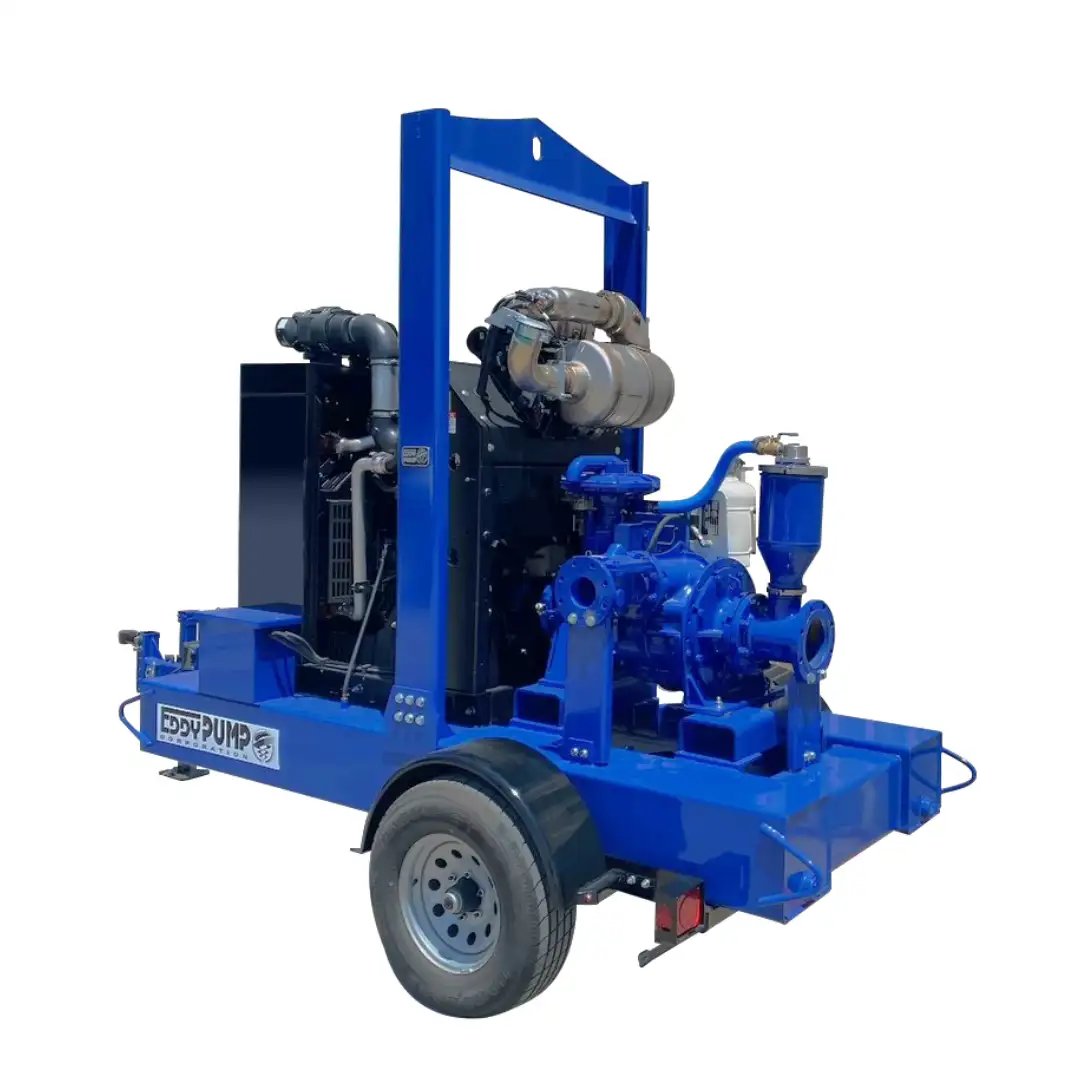
Move abrasive slurry, sludge, sediment, sand, and tailings with an EDDY Pump self-priming slurry pump built for demanding field conditions. Available in trailer-mounted and self-priming excavator pump configurations, these systems give operators a dry-prime, non-clog pumping solution for dredging, slurry transfer, dewatering, and high-solids material handling without relying on flooded suction or submerged pump placement.
-
Available in trailer-mounted and excavator-mounted self-priming configurations
-
Dry-prime operation without flooded suction requirements
-
Handles abrasive slurry, sludge, sediment, sand, and tailings
-
Built for dredging, slurry transfer, dewatering, and difficult field conditions
Why Choose a Self-Priming Slurry Pump?
Self-priming slurry pumps are designed for jobs where mobility, fast setup, and reliable solids handling matter. Unlike pump systems that require flooded suction or submerged placement, EDDY Pump self-priming systems allow operators to position the pump above the fluid level while drawing slurry through suction hose into the system. That makes them a strong fit for temporary work zones, changing job sites, remote operations, and projects where setup speed and accessibility are critical. EDDY Pump’s self-priming family is positioned specifically for dry-prime operation, high-solids pumping, and trailer or field deployment.
Key Benefits
- No flooded suction requirement
- Easier setup for remote or changing work zones
- Strong fit for mobile dredging and transfer applications
- Designed for high-solids slurry and abrasive material handling
- Available in trailer-mounted and excavator-based configurations
- Built to reduce clogging issues common with standard pump designs
What EDDY Pump Self-Priming Pumps Can Handle
EDDY Pump self-priming systems are designed for abrasive, solids-laden, and difficult slurry applications where conventional pumps may struggle with wear, clogging, or unreliable production. These pumps are built for operators who need to move settled solids, dense slurry, and abrasive material efficiently in the field. EDDY Pump’s self-priming lines are positioned for slurry transfer, dredging, and material handling in industries where solids concentration and particle size make standard pump setups a poor fit.
Common Material Types
- Sludge
- Sediment
- Sand
- Tailings
- Abrasive slurry
- Industrial sludge
- Mining slurry
- Dredged material
- Solids-laden wastewater residuals
For excavator self-priming systems, final pump selection should always be based on material density, solids percentage, particle size distribution, discharge distance, and available power or hydraulics.
Best-Fit Applications for Self-Priming Slurry Pumps
EDDY Pump self-priming pumps are best suited for projects that need reliable slurry transfer in field conditions where mobility, dry-prime operation, and high-solids handling are important. Some applications are better suited to a trailer-mounted self-priming pump, while others are a stronger fit for a self-priming excavator pump & bucket that combines excavation and pumping in one system.

Lagoon and Pond Dredging
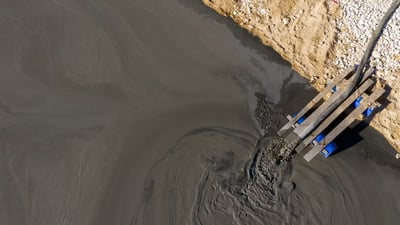
A strong fit for lagoon dredging, settling pond cleanup, and sludge removal where operators need to move solids-laden material without placing the pump in the slurry.
Mining and Tailings Transfer
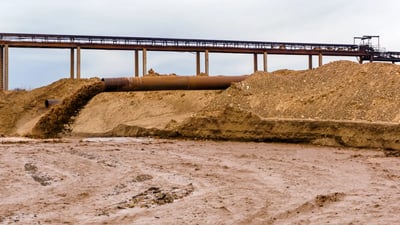
Well suited for mining slurry, tailings transfer, reclaim work, and solids removal from pits or ponds where abrasive material can overwhelm conventional pumps.
Industrial Sludge and Slurry Transfer
Designed for industrial cleanup, plant maintenance, and sludge movement where dense material must be transferred efficiently in the field.

Dewatering and Sediment Removal
Useful for dewatering support, sediment removal, and solids transfer where operators need a dry-prime pumping solution that can be deployed quickly and moved as work conditions change.

Canal and Waterway Maintenance
A practical option for canal sediment removal, waterway cleanup, and slurry transfer in applications where mobility and setup speed matter.

Excavation-Based Dredging and Shoreline Work
Best suited to the self-priming excavator pump & bucket configuration, which combines excavation, cutting, and slurry pumping in one setup.
How EDDY Pump Self-Priming Systems Work
EDDY Pump self-priming systems are designed to move slurry efficiently without requiring the pump to be submerged or continuously flood-fed. Depending on the project, operators can choose a trailer-mounted self-priming pump for mobile transfer and dredging work, or a self-priming excavator pump & bucket when excavation and pumping need to happen in one integrated system.
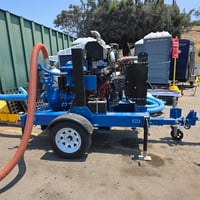
1. Trailer-Mounted Self-Priming Pump
Position the Pump
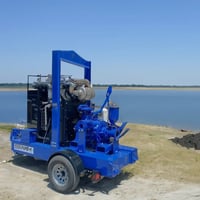
Move the trailer-mounted unit into place near the work area.
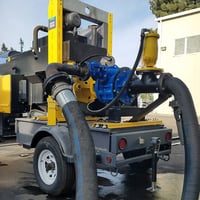
Place the Suction Line
Set the suction hose into the slurry, sludge, or solids-laden material.
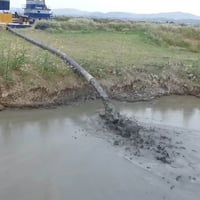
Prime and Transfer Material
Use the self-priming system to begin slurry transfer without submerging the pump or power unit.
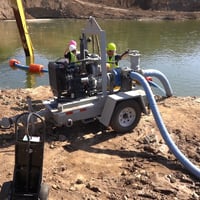
Reposition as the Job Changes
Move the trailer easily between work areas as the project progresses.
2. Self-Priming Excavator Pump & Bucket
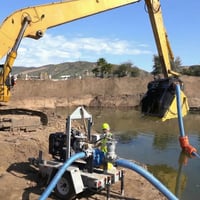
Mount the System
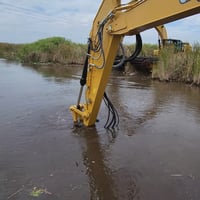
Attach the self-priming pump and bucket assembly to the excavator.
Cut and Entrap Material
Use the bucket and cutter system to loosen and gather solids directly at the excavation face.
Pump the Slurry
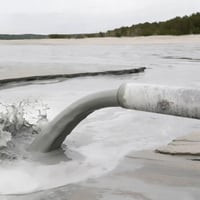
Transfer slurry through discharge line while excavating and collecting material.
Restart After Repositioning
Use the self-priming setup to recover faster after movement or shutdowns without relying on a separate priming process.
Why Self-Priming Pumps Beat Conventional Slurry Pump Setups
5.webp?width=400&height=400&name=eddy-Self-Priming%20Slurry%20Pumps%20(Diesel%20Trailer-Mounted%20Mobile%20Pumps)5.webp "eddy-Self-Priming Slurry Pumps (Diesel Trailer-Mounted Mobile Pumps)5")
For many jobs, self-priming pumps offer a more practical solution than conventional slurry pump setups that depend on flooded suction, submerged placement, or more complex mobilization. That makes them especially useful where operators need flexibility, faster setup, and better performance in changing work environments.
Key Advantages Over Conventional Setups
- No flooded suction requirement
- Faster deployment in temporary or changing work zones
- Easier positioning for mobile field operations
- Better fit for dry-prime slurry transfer and dredging applications
- Strong solids-handling capability for abrasive and difficult material
- Reduced dependence on submerged pump placement
- Available in both trailer and excavator-mounted self-priming formats
Why Choose EDDY Pump for Self-Priming Slurry Pumps
EDDY Pump is known for solving difficult slurry and solids-handling problems in demanding environments. Its self-priming pump lineup extends that same practical approach by giving operators a dry-prime pumping solution that can be matched to the way the job is actually performed.
Why Buyers Choose EDDY Pump
- Built for abrasive, solids-laden slurry applications
- Designed for dry-prime operation in field conditions
- Available in trailer-mounted and excavator-mounted configurations
- Backed by EDDY Pump’s non-clog slurry pump design approach
- Supports dredging, transfer, dewatering, and excavation-based pumping
- Matched to real application requirements, not one-size-fits-all assumption
Technical Considerations and System Sizing
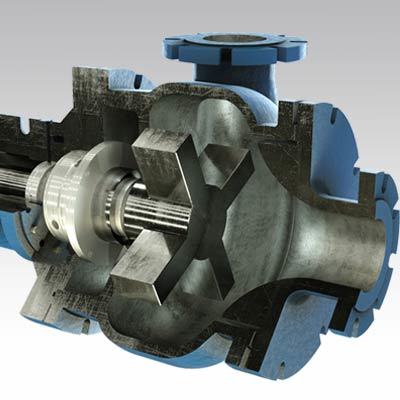
Selecting the right self-priming pump depends on more than pump size alone. Material type, solids percentage, discharge distance, production goals, site mobility needs, and available power or hydraulics all affect the correct setup. The best recommendation depends on how the slurry needs to be accessed, loosened, and transferred.
Trailer-Mounted Self-Priming Pump Sizing
Trailer-mounted self-priming pumps are best suited for mobile slurry transfer, dredging support, dewatering, and changing field operations where quick repositioning is important.
Key Considerations
- Pump size and flow requirement
- Total dynamic head and discharge distance
- Slurry type and solids percentage
- Trailer or skid mounting preference
- Diesel power requirements
- Mobility needs across the worksite
Self-Priming Excavator Pump & Bucket Sizing
The self-priming excavator line is designed for excavation-based pumping where the operator needs to loosen, capture, and pump material directly from the source.
Key Considerations
- Excavator size and hydraulic capacity
- Material type and density
- Solids percentage and particle size
- Required production rate
- Discharge distance and elevation
- Need for cutterhead, jetting ring, or auger option
Self-Priming Diesel Pump Guide
|
Model |
Size |
Power |
Flow Range |
Head |
|
DSP/HD 3000 |
3-inch |
43 HP |
100–780 GPM |
up to 130 ft |
|
DSP/HD 4000 |
4-inch |
43 HP |
250–1,200 GPM |
up to 200 ft |
|
DSP/HD 4000 |
4-inch |
115 HP |
250–1,200 GPM |
up to 200 ft |
|
DSP/HD 6000 |
6-inch |
115 HP |
450–2,000 GPM |
up to 200 ft |
|
DSP/HD 6000 |
6-inch |
173 HP |
450–2,000 GPM |
up to 200 ft |
|
DSP 8000 |
8-inch |
550 HP |
1,600–5,000 GPM |
up to 240 ft |
|
DSP 10000 |
10-inch |
550 HP |
1,600–5,000 GPM |
up to 240 ft |
|
DSP 12000 |
12-inch |
700 HP |
2,600–7,300 GPM |
up to 180 ft |
Self-Priming Slurry Pump FAQs
What is a self-priming slurry pump?
A self-priming slurry pump is designed to start and operate without requiring flooded suction or submerged pump placement. It allows operators to position the pump above the fluid level while drawing slurry into the system through suction line. EDDY Pump positions its self-priming systems around dry-prime slurry handling for field operations.
When should I choose a trailer-mounted self-priming pump?
A trailer-mounted self-priming pump is usually the better choice when mobility, fast repositioning, and field transfer work are the priority. It is a strong fit for dewatering, slurry transfer, pond cleanup, and changing job sites.
When is the self-priming excavator pump & bucket the better fit?
The self-priming excavator pump & bucket is the better fit when excavation and pumping need to happen together. It is especially useful for dredging, sediment removal, shoreline work, and direct pumping from the excavation face.
Can EDDY self-priming pumps handle high-solids slurry?
Yes. EDDY Pump markets its self-priming systems for abrasive slurry, sludge, sediment, tailings, and other solids-laden applications. Published excavator self-priming specifications also note high-solids pumping capability and large solids handling depending on the model.
Do these systems require flooded suction?
No. A key advantage of the self-priming configuration is that it does not depend on flooded suction in the same way conventional setups do.
Can the self-priming excavator system restart after shutdowns or repositioning?
Yes. EDDY Pump’s self-priming excavator system is positioned as a solution that can recover faster after movement or shutdowns compared with systems that require a separate priming process.
How do I choose the right self-priming configuration?
The right choice depends on whether the job is mainly a transfer/mobile pumping application or an excavation-and-pumping application. Trailer-mounted units are often the better fit for mobile slurry transfer, while excavator self-priming systems are better for direct dredging and excavation-based pumping.
Terms & Conditions - Privacy Policy
Copyright © 2026, Eddy Pump