.svg)
High‑Head High‑Viscosity (HHHV) Pump for Thick Fluids, High Pressure, and Difficult Transfer
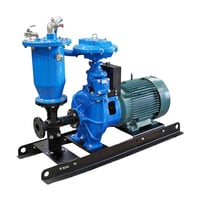
The EDDY HHHV Pump is built for ultra-viscous liquids and thick slurries that need more than a standard process pump can deliver. It is designed to move heavy material at high head without constant dilution, stacked booster pumps, or the maintenance burden of tight-tolerance pump designs.
- Handles viscosities up to 75,000 cP
- Generates 500+ ft TDH / 215 psi in the right configuration (application dependent)
- Patented Boundary Layer Rotor helps reduce internal friction and maintain product integrity
- Non-clog design with wider internal clearances for thick fluids, solids, and abrasive duty
- Built for oil & gas, mining, chemical, sludge, and selected food/process service






Why Choose a High-Head High-Viscosity Pump?
When a process has both high viscosity and high head requirements, standard pump selection usually turns into compromise. One pump handles viscosity but gives up flow. Another can create pressure but struggles as the fluid thickens. The fallback becomes dilution, booster pumps, or repeated maintenance. A purpose-built HHHV pump exists for jobs where fluid thickness, pipeline friction, solids, and pressure all show up at once.
Key benefits:
- Keeps difficult fluid moving when viscosity and discharge pressure rise together
- Helps reduce dependence on dilution water, chemical thinning, or multi-pump staging
- Better suited for thick slurry, drilling mud, bitumen, heavy crude, sludge, and paste than standard clean-liquid pumps
- Wider internal clearances help reduce clogging risk when thick product also carries solids or debris
- Supports long transfer distances, elevation gain, or higher system resistance with fewer failure points
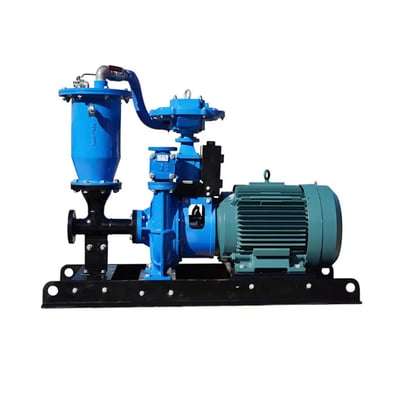
The EDDY Pump Advantage
The EDDY HHHV Pump is built around the patented Boundary Layer Rotor and a more open hydraulic path than tight-tolerance pump designs. Instead of forcing thick product through narrow internal passages, the pump is engineered to reduce internal friction, lower disturbance, and give difficult media more room to move. That matters when the fluid is thick, the line is long, the pressure is high, and downtime is expensive.
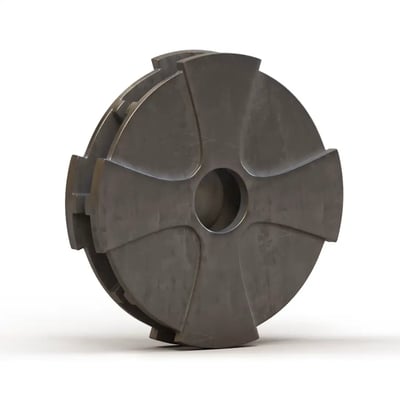
- Patented Boundary Layer Rotor creates a lower-disturbance pumping action
- Designed to combine high-viscosity handling and high head in one pump
- Wider internal clearances than tight-tolerance viscosity pump designs
- Heavy-duty construction for abrasive, corrosive, and high-specific-gravity material
- Helps protect uptime in applications where conventional pumps become maintenance-intensive
Best-Fit Applications

Oil & Gas
Heavy crude, bitumen, drilling mud, tank bottoms, and viscous waste streams.

Mining
Tailings, oil sands, thick slurry transfer, clay-rich waste, and abrasive process streams.

Municipal/Industrial sludge
Thickened sludge, digester feed, dewatered cake recirculation, and heavy waste transfer.

Chemical processing
Viscous compounds, resins, slurries, byproducts, and high-resistance transfer lines.
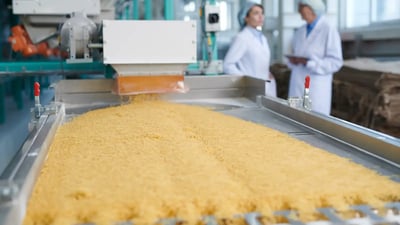
Food & process manufacturing
Syrups, sauces, pastes, and consistency-sensitive high-viscosity product.

Pulp/Paper and industrial waste
Fibrous or heavy byproduct streams requiring pressure and reliability.
How the HHHV Pump Works
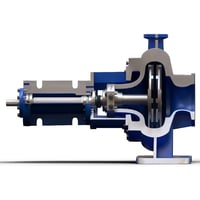
The HHHV Pump is not just a bigger standard pump. The core difference is the patented EDDY Boundary Layer Rotor and the hydraulic path around it. Instead of relying on tight internal tolerances to force fluid through small cavities, the HHHV design creates a boundary-layer effect that reduces direct friction and material disturbance while keeping a more open passage for difficult media.
Boundary Layer Rotor
The rotor creates a dynamic flow pattern that helps move thick fluid with less internal resistance than many conventional pump designs.
High Head Capability
The pump is engineered to deliver high discharge pressure — 500+ ft TDH / 215 psi in the right configuration — so the system can often avoid booster pumps or multiple stages.

Non-Clog / Solids-Friendly Flow Path
Wider clearances give thick slurry, abrasives, and entrained solids more room than tight-tolerance viscosity pumps typically allow.
For selected process fluids, the lower-disturbance pumping action can help maintain consistency better than harsher pumping methods.
Why These Pumps Over Conventional Pumps?
-
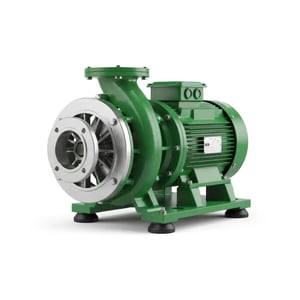
Standard centrifugal pumps can offer good flow on thinner liquids, but rising viscosity usually increases friction loss and drags down flow / head performance.
-
Progressive cavity pumps can be strong on viscosity and metering, but tight rotor / stator geometry may become maintenance-heavy in abrasive solids duty and dry-run sensitivity matters.
-
Rotary lobe pumps can be useful on viscous fluids and selected solids-laden service, though wear, clearances, and pressure / flow tradeoffs still depend on duty
-
Peristaltic hose pumps are attractive for abrasives and seal-less containment, but hose life, flow limits, and operating cost can become the real boss of the system
-
Gear pumps are effective for some cleaner viscous fluids and pressure duty, but they are usually a worse fit when solids, abrasives, or debris enter the picture
-
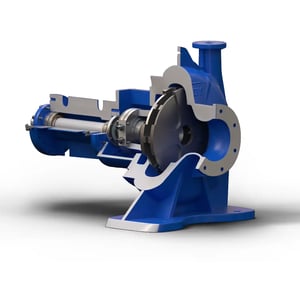
The EDDY HHHV case is strongest when the application demands both viscosity handling and high head, especially when solids, abrasion, downtime, or dilution cost are part of the problem
For selected process fluids, the lower-disturbance pumping action can help maintain consistency better than harsher pumping methods.
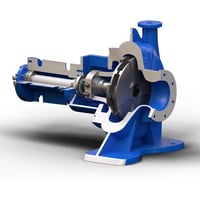
Why Choose EDDY Pump for HHHV Pumps?


Technical Considerations
- Fluid type and process objective
- Operating viscosity at actual temperature, not just room-temperature lab data
- Solids % and largest particle size
- Required flow rate and target TDH / psi
- Discharge distance, pipe size, elevation change, and fittings
- Temperature, shear sensitivity, or product-integrity concerns
- Power available and installation constraints
- Whether dilution is acceptable or should be avoided
- Duty cycle / runtime expectations
Need High Viscosity + High Head Without a Booster-Pump Circus?
Tell us the fluid, viscosity, solids, and required flow / pressure. We will review the duty and tell you whether the HHHV Pump is the right fit and how to configure it.
Frequently Asked Questions
What viscosity range can the HHHV pump handle?
Current EDDY Pump materials position the HHHV pump for fluids and slurries up to 75,000 cP. Actual fit still depends on temperature, solids, and the flow / pressure target, because viscosity on paper and viscosity in the line are not always identical twins.
How much head or pressure can it generate?
EDDY Pump states 500+ ft TDH / 215 psi in the right configuration. The exact result depends on the system curve, pipe size, fluid properties, temperature, and required flow rate.
Does this eliminate the need for booster pumps?
In some applications, yes; that is one of the core reasons this page exists. But final booster-pump needs still depend on discharge distance, elevation, pipe diameter, and friction loss. We should position the HHHV pump as a way to reduce complexity, then size the line honestly.
Can it handle solids or abrasive slurry too?
Yes. That is a major part of the value proposition. The wider internal clearances and non-clog design make it a stronger fit than tight-tolerance viscosity pumps when thickness, abrasion, and solids show up together.
Is this a progressive cavity pump alternative?
Often yes, especially when the job also includes abrasives, solids, clog risk, or higher flow / head demands. Progressive cavity pumps still belong in some metering or lower-flow applications, so the right answer is duty-specific, not religious.
What industries use HHHV pumps?
Common fits include oil & gas, mining, chemical processing, sludge / wastewater, food and process manufacturing, and other heavy-duty transfer applications involving thick or difficult media.
What information do you need to size the pump correctly?
We need fluid type, operating viscosity, solids %, largest solids size, temperature, target flow, required TDH / psi, discharge distance, pipe size, power availability, and any process constraints such as no dilution or product-integrity concerns.
What happens after I submit the form?
We review the application, ask follow-up questions if needed, and come back with a recommended configuration and pricing guidance. The goal is not to throw a pump at the wall and see if it sticks.
Terms & Conditions - Privacy Policy
Copyright © 2026, Eddy Pump